Showing posts with label ecology. Show all posts

Friday, December 9, 2016

Lichens: A Burst of Color on a Dark Day

The lichens have awoken.
Lichens, moss, and mushrooms in the Palisades.
Photo by PBM. Used with permission.

 Late autumn, almost winter. The trees are bare and the sky is grey. A light mist falls. New York City seems devoid of life. Scaffolding drips and trains run late.

Grey day on the Hudson River.
Photo by PBM. Used with permission.

Across the Hudson River, a few miles away from the dead-grey of the city in the Palisades Interstate Park in New Jersey delicate greens and specks of mustard yellow coat rocks and trees in a quietly vibrant layer.

Lichens on a rock in the Palisades.
Photo by PBM. Used with Permission.

On a cheerful sunny day, the same lichen appear as a crusty dust on a rock, but in the dismal rain these creatures burst forth.

My rainy hike in the Palisades reminded me of my love for lichen and then I realized something rather embarrassing: I knew relatively nothing about my favorite organisms. The lichens I saw inspired me to learn more about them.
Lichens on a tree in the Palisades.
Photo by PBM. Used with permission.

Lichens are intricate beings, and before we can delve into their complexities, let’s start with the basics.

What Are Lichens?

Lichens are the product of a mutually-beneficial relationship between fungi (the mycobiont) and algae or cyanobacteria (the photobiont).

What does this mean?

Basically, a fungus and an algae or a cyanobacteria join forces for better living, and in the process, they form what we call a lichen.
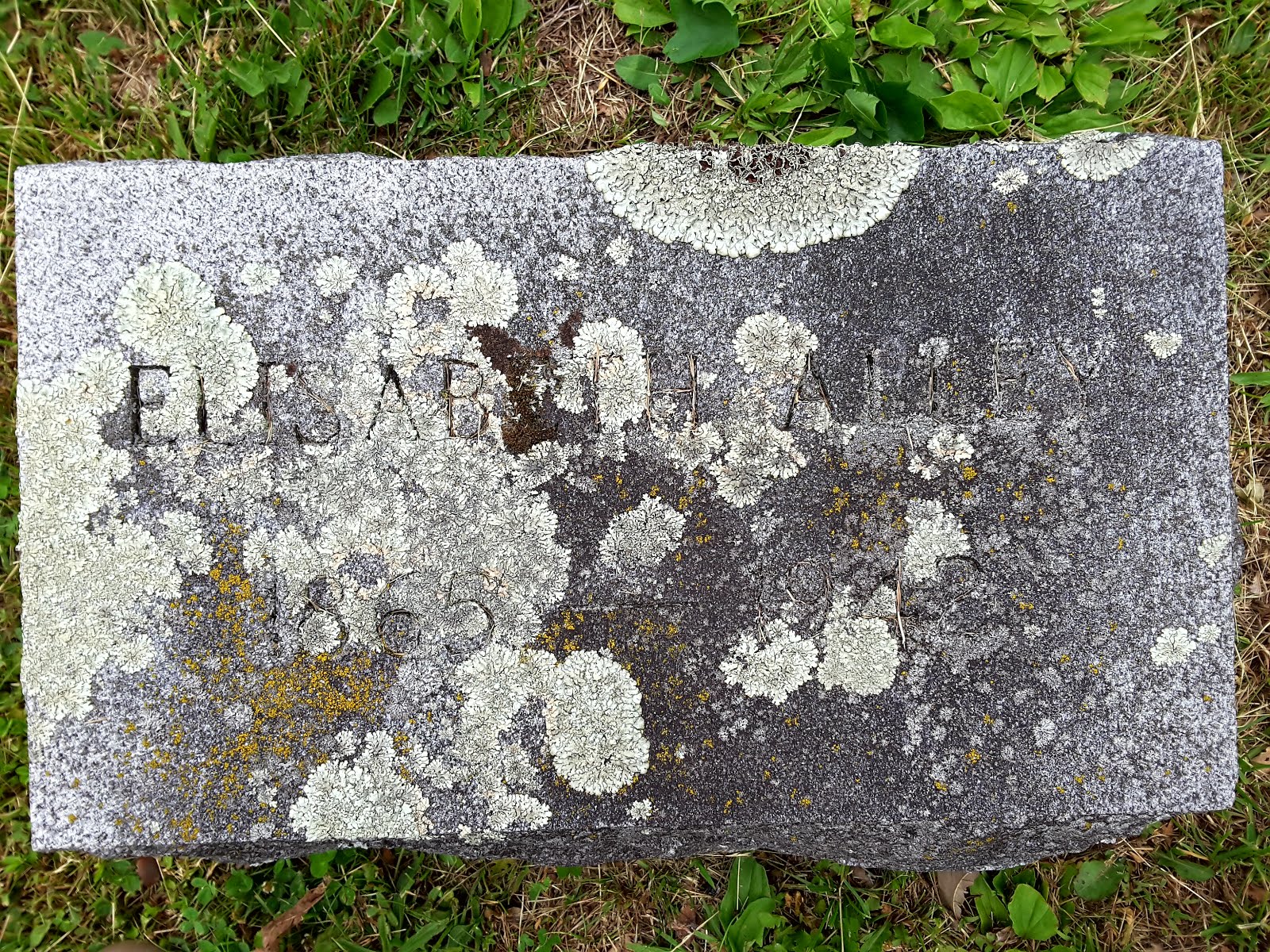
Lichens on a gravestone at Cortland Rural Cemetery.
Photo by PBM. Used with permission.

Not all fungi and algae/cyanobacteria are well-suited for the lichen life. For fungi which thrive in a lichen relationship, the process of selecting a worthy photobiont is a ruthless one.

A fungi will try to form a partnership with any nearby algae/cyanobacteria. As the partnership is forming, the fungi try to kill off the algae/cyanobacteria. Any algae/cyanobacteria that survives the attempted slaughter is deemed a suitable partner by the fungi and the two will form a lichen together.

What do Lichens Look Like?

Internal Structure

In primitive lichens, the cells of the mycobionts and photobionts are thrown together in a miscellaneous mishmash, but more advanced lichens have distinct layers with specific functions.

Lichen diagram by blog author.
External Appearance

Lichens are strange hybrids which look like neither fungi nor algae/cyanobacteria. There are three main types of lichen: 

fruticose lichens, 
Fruticose lichen photo by Jason Hollinger. A creative commons image.
Source.

foliose lichens, 
Foliose lichen photo by Norbert Nagel. A creative commons image.
Source.

and crustose lichens.

Crustose lichen photo by Roger Griffith. A creative commons image.
Source.
Then, there are countless variations on these basic types.

The physical characteristics of lichens are influenced by lichen acids, byproducts of lichen metabolism. These acids often give a lichen its characteristic color.

Lichens in the sun look almost completely different than lichens on a rainy day. Why? Lichens shrivel up and hibernate when the air is dry to reduce water loss, they open up again to soak up water when the air is moist. Wet days are the best days to observe lichens in all their glory.

Pollution

Lichens absorb water indiscriminately without filtering it. This means they also absorb all the pollutants in the water. Often these poisonous pollutants are too much for the poor lichens to handle, which is why there aren’t many lichens in large cities. The lichens that survive intense pollution tend to be small since their already slow growth is stunted by pollution.
 
Lichen on a NYC street tree. Photo by blog author.
Lichen Reproduction

Some of the lichens I noticed on my hike were covered in dark dots. These dots are a common type of spore-producing growth called disc-shaped apothecia produced by the fungal partner of the lichen for sexual reproduction. Lichens produce spores all year round, and like lichens themselves, the spore production sites are mainly active when wet.
Lichens in the Palisades with spore-producing growths.
Photo by PBM. Used with permission.

The odd thing about lichens is since they are a combination of two organisms, only the fungal part of the lichen can reproduce sexually. The spores the fungi release may grow as a pure fungus, they may die, or they may find a photobiont partner and become lichens, possibly a different type of lichen then their parent.

Lichens also reproduce asexually when small pieces of the mother organism break off and are carried away animals, wind, or water to a new home. To speed along asexual reproduction, lichens produce isidia—small outgrowths which break off easily—and soredia—powdery granules of a few cells which can blow and float to a new location.

Lichen Longevity

Once a lichen does set up shop, it can live for thousands of years. Lichens grow incredibly slowly, so it is a good thing that they can live so long. One lichen in northern Sweden is thought to be over 9,000 years old!

Lichens on a gravestone at Cortland Rural Cemetery.
Photo by PBM. Used with permission.
Now that I’ve learned some lichen basics I hope to start identifying the species of lichens I see. If you know what species any of the lichens in the photos from this post are, please let me know in the comments!


Wednesday, November 30, 2016

Invasive Species: Friends or Foes?

We’ve all heard horror stories about invasive species, but are introduced plants and animals really as bad as the media paints them?

News headlines on invasive species. Image by author. Sources for headlines.
The answer to this question depends on exactly which invasive species we are referring to.

The brown tree snake (Boiga irregularis) is an example of a truly harmful invasive species. 
Brown tree snake. Public domain image. Source.

The brown tree snake arrived on the small Pacific Island of Guam in the late 1940s or early 1950s as a stowaway on military cargo, and has since eaten most of Guam’s birds, lizards, and small mammals. Guam’s fauna never experienced predation by a large snake before, and they are suffering horribly under the reign of the invasive brown tree snake.

In addition to eating Guam’s native species, the brown tree snake causes frequent power outages. How can a snake cause power outages? By climbing pylons and shorting out the power circuits! Climbing pylons is a dangerous hobby as it kills the snake, inconveniences Guam’s citizens, and costs power companies too much money in repairs.

Brown tree snake on top of a fence post. Creative commons image. Source.
The brown tree snake also costs the US military stationed on Guam millions of dollars each year in safety measures to prevent this pesky predator from escaping to another island. So far, this money is well spent as the brown tree snake has not escaped Guam.

The only good thing about the brown tree snake is that it eats Guam’s rats.

But what about another invasive species, garlic mustard (Alliaria petiolata)? I remember when garlic mustard was one of the most hated plants in NYC. Garlic mustard grew in dense monocultures and drove out other plants. Every time I went on a walk I would see huge piles of garlic mustard the parks department ripped out of the soil in an attempt to eradicate this species. Now, I rarely see piles of dead garlic mustard. Instead, I see garlic mustard growing alongside other plants along the park paths. What caused this change?
Garlic mustard. Creative commons image. Source.

 Garlic mustard was deliberately introduced to the United States in 1868 on Long Island for its ability to control erosion and its medicinal properties. While garlic mustard may look innocent and charming with its little white flowers, this plant had serious issues with poisoning its neighbors. 

Sinigrin, the toxic chemical garlic mustard emits, kills nearby plants and mycorrhizal fungi. Mycorrhizal fungi are a type of fungi which colonize the roots of plants and help their plant partners absorb more water and nutrients. Without their mycorrhizal fungi, the lives of plants living near garlic mustard were jeopardized, which allowed garlic mustard to push these plants out. Soon garlic mustard was dominating the forest floor.

Now, garlic mustard has been living in the United States for a long time and it is learning to be a kinder neighbor. U.S. garlic mustard doesn’t emit as much sinigrin as it used to, and the plant can grow next to other species without killing them.

Garlic mustard flowers. Creative commons image. Source.
Why is this?

High levels of sinigrin release, seen when garlic mustard first was colonizing the states, is most beneficial for garlic mustard when the plant is mainly competing with other species. However, when garlic mustard is well established, it mainly competes with itself, which means low levels of sinigrin release are preferable. Low levels of sinigrin emission are currently so favorable for the U.S. garlic mustard population that the genetics of this population changed to make low levels sinigrin release widespread and innate.

Now that garlic mustard has had a chance to settle into its new home, it’s not acting particularly dangerous and invasive anymore, is it?

Purple loosestrife (Lythrum salicaria) and Canadian pondweed (Elodea canadensis) are two other introduced species, like garlic mustard, accused of forming monocultures and driving out native species. After forming dense stands during the first few years of introduction, purple loosestrife and Canadian pondweed populations both declined significantly, like garlic mustard did, and they now live peacefully next to native plants. Non-native species may need a few years to acclimate to their new homes. We may be accusing them of wrongdoing too quickly.

The purple haze in the background of this photo is purple loosestrife.
Photo by PBM. Used with permission.

Admittedly, garlic mustard, purple loosestrife, and Canadian pondweed are not the worst invasive species. These plants don’t hold a candle to the brown tree snake. Are the more wickedly painted invaders, like zebra mussels (Dreissena polymorpha) or tamarisk (Tamarix sp.), ever falsely accused?

News headline on invasive species. Image by author. Sources for headlines.

Yes, non-native species are often blamed for problems we humans caused simply because they are found near where the damage occurred. 


Illustration of a zebra mussel. A public domain image. Source.
Zebra mussels are incriminated for clogging pipes, covering every hard surface underwater, and eliminating endangered freshwater mollusks. The fact is, freshwater mollusks were on the decline long before zebra mussels ever arrived because of habitat degradation and pollution caused by humans. Zebra mussels do compete with these mollusks for food, but it is wrong to blame them for endangering the mollusks. 

Zebra mussels. Creative commons image. Source.
Zebra mussels do cover a large amount of hard surface area underwater, but while doing so, they filter polluted water. As a result of the zebra mussels’ filtering job, the water is clearer, which promotes the growth of aquatic plants. These plants provide cover for fish and invertebrates and help increase their populations. The fish then feed on the zebra mussels and help clear some of the hard surfaces they live on. Zebra mussels also serve as a major food source for waterfowl. 

Yes, zebra mussels may inconvenience water companies by clogging their pipes, but they aren’t the evil species the media makes them out to be.

Zebra mussels on water meter. Public domain image by NOAA. Source.

Tamarisk has a similar story. This small tree is blamed for being a water hog and for destroying native bird habitat. Actually, humans were the ones using all the water. Tamarisk use about the same amount of water as native plants. In addition, tamarisk provides habitat for native birds. This plant isn’t quite as bad as the headlines make it seem.
Tamarisk flowers. Creative commons image. Source.

The whole idea that introduced species must be harmful is a xenophobic attitude. Once a non-native species takes root, it is next to impossible to eradicate. Introduced species are not going away anytime soon either, as international trade and travel just make it easier for species to globe trot. It’s time to accept the innocent immigrants species and the benefits they can offer our ecosystem.