Showing posts with label biology. Show all posts

Friday, December 9, 2016

Lichens: A Burst of Color on a Dark Day

The lichens have awoken.
Lichens, moss, and mushrooms in the Palisades.
Photo by PBM. Used with permission.

 Late autumn, almost winter. The trees are bare and the sky is grey. A light mist falls. New York City seems devoid of life. Scaffolding drips and trains run late.

Grey day on the Hudson River.
Photo by PBM. Used with permission.

Across the Hudson River, a few miles away from the dead-grey of the city in the Palisades Interstate Park in New Jersey delicate greens and specks of mustard yellow coat rocks and trees in a quietly vibrant layer.

Lichens on a rock in the Palisades.
Photo by PBM. Used with Permission.

On a cheerful sunny day, the same lichen appear as a crusty dust on a rock, but in the dismal rain these creatures burst forth.

My rainy hike in the Palisades reminded me of my love for lichen and then I realized something rather embarrassing: I knew relatively nothing about my favorite organisms. The lichens I saw inspired me to learn more about them.
Lichens on a tree in the Palisades.
Photo by PBM. Used with permission.

Lichens are intricate beings, and before we can delve into their complexities, let’s start with the basics.

What Are Lichens?

Lichens are the product of a mutually-beneficial relationship between fungi (the mycobiont) and algae or cyanobacteria (the photobiont).

What does this mean?

Basically, a fungus and an algae or a cyanobacteria join forces for better living, and in the process, they form what we call a lichen.
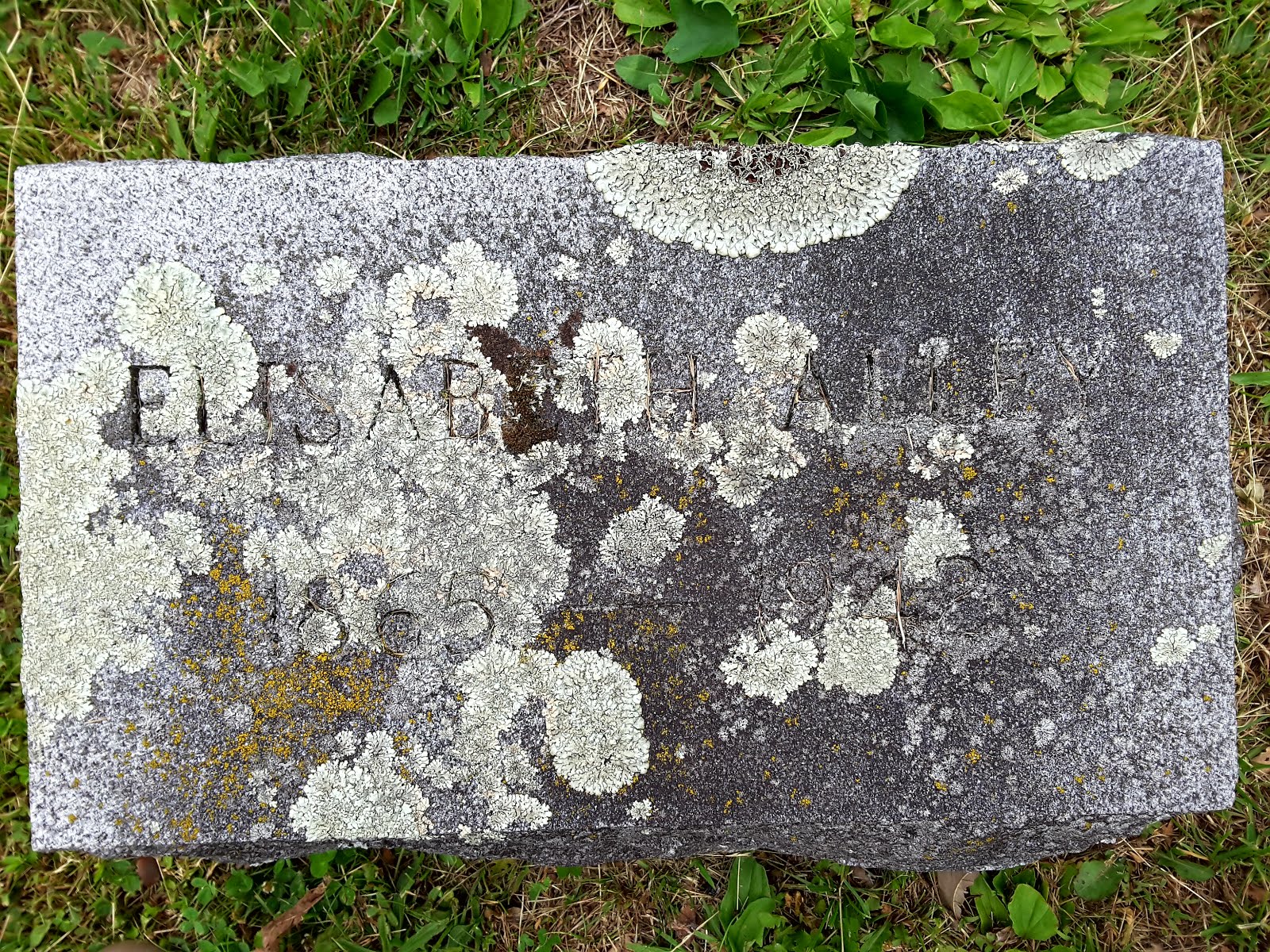
Lichens on a gravestone at Cortland Rural Cemetery.
Photo by PBM. Used with permission.

Not all fungi and algae/cyanobacteria are well-suited for the lichen life. For fungi which thrive in a lichen relationship, the process of selecting a worthy photobiont is a ruthless one.

A fungi will try to form a partnership with any nearby algae/cyanobacteria. As the partnership is forming, the fungi try to kill off the algae/cyanobacteria. Any algae/cyanobacteria that survives the attempted slaughter is deemed a suitable partner by the fungi and the two will form a lichen together.

What do Lichens Look Like?

Internal Structure

In primitive lichens, the cells of the mycobionts and photobionts are thrown together in a miscellaneous mishmash, but more advanced lichens have distinct layers with specific functions.

Lichen diagram by blog author.
External Appearance

Lichens are strange hybrids which look like neither fungi nor algae/cyanobacteria. There are three main types of lichen: 

fruticose lichens, 
Fruticose lichen photo by Jason Hollinger. A creative commons image.
Source.

foliose lichens, 
Foliose lichen photo by Norbert Nagel. A creative commons image.
Source.

and crustose lichens.

Crustose lichen photo by Roger Griffith. A creative commons image.
Source.
Then, there are countless variations on these basic types.

The physical characteristics of lichens are influenced by lichen acids, byproducts of lichen metabolism. These acids often give a lichen its characteristic color.

Lichens in the sun look almost completely different than lichens on a rainy day. Why? Lichens shrivel up and hibernate when the air is dry to reduce water loss, they open up again to soak up water when the air is moist. Wet days are the best days to observe lichens in all their glory.

Pollution

Lichens absorb water indiscriminately without filtering it. This means they also absorb all the pollutants in the water. Often these poisonous pollutants are too much for the poor lichens to handle, which is why there aren’t many lichens in large cities. The lichens that survive intense pollution tend to be small since their already slow growth is stunted by pollution.
 
Lichen on a NYC street tree. Photo by blog author.
Lichen Reproduction

Some of the lichens I noticed on my hike were covered in dark dots. These dots are a common type of spore-producing growth called disc-shaped apothecia produced by the fungal partner of the lichen for sexual reproduction. Lichens produce spores all year round, and like lichens themselves, the spore production sites are mainly active when wet.
Lichens in the Palisades with spore-producing growths.
Photo by PBM. Used with permission.

The odd thing about lichens is since they are a combination of two organisms, only the fungal part of the lichen can reproduce sexually. The spores the fungi release may grow as a pure fungus, they may die, or they may find a photobiont partner and become lichens, possibly a different type of lichen then their parent.

Lichens also reproduce asexually when small pieces of the mother organism break off and are carried away animals, wind, or water to a new home. To speed along asexual reproduction, lichens produce isidia—small outgrowths which break off easily—and soredia—powdery granules of a few cells which can blow and float to a new location.

Lichen Longevity

Once a lichen does set up shop, it can live for thousands of years. Lichens grow incredibly slowly, so it is a good thing that they can live so long. One lichen in northern Sweden is thought to be over 9,000 years old!

Lichens on a gravestone at Cortland Rural Cemetery.
Photo by PBM. Used with permission.
Now that I’ve learned some lichen basics I hope to start identifying the species of lichens I see. If you know what species any of the lichens in the photos from this post are, please let me know in the comments!


Friday, July 1, 2016

Zika

The mosquito-transmitted virus Zika has been getting world-wide attention since the World Health Organization’s (WHO) announcement in February that it is a national health concern. More recently, the Zika case in New Jersey is prompting discussion about this disease in the United States. What effects does Zika have on humans? What does this mean to people around the world? What can we do to stop Zika?

An enlarged model from the American Museum of Natural History(AMNH) of Aedes aegypti,the mosquito which transmits Zika.  
Photo was taken on June 30, 2016 by author at AMNH's SciCafe event.

An average individual with no immuno-compromising disorders contracted Zika, nothing much would happen. Maybe the individual would get a headache, conjunctivitis, joint pain, or a mild fever, irritating, but not bad enough to report or go to the hospital. Most people (80%) with Zika don’t even know they have it, and completely recover after the virus leaves the body a few months later. There may be a slight connection between Guillain-BarrĂ© syndrome, which can cause severe paralysis, and Zika, but the connection is unproven and does not render Zika a national concern. Why then are people, WHO included, so worried about Zika?

Zika may go virtually unnoticed in adults, but if a fetus contacts Zika from the mother during gestation, it can develop severe birth defects such as microcephaly, increased calcification in the brain, and other motor and behavioral complications. Zika can cause birth defects no matter what trimester of pregnancy it is contracted in.
If Zika continues to spread, it could severely damage human populations. Dr. W. Ian Lipkin, John Snow Professor and Director of the Center of Infection and Immunity at Columbia University, stated at the American Museum of Natural History’s Zika SciCafe on June 30, 2016 that if there is any way to wreak havoc on a species, it is to prevent it from reproducing properly, and that’s what Zika is doing to us.

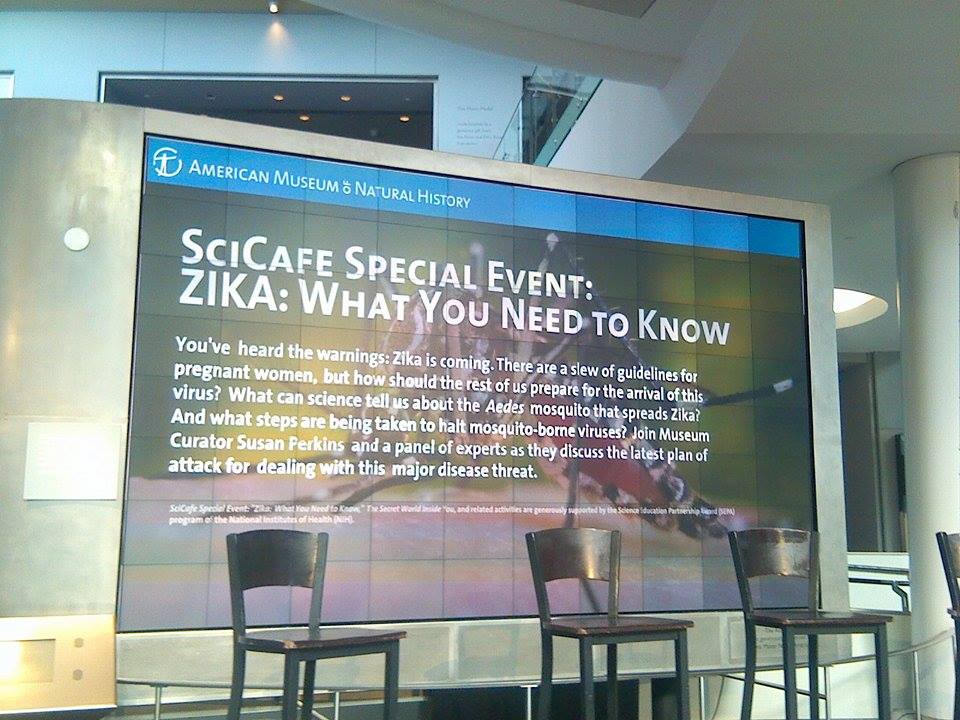
AMNH SciCafe.  Panelists at the cafe were:
 Dr. W. Ian Lipkin; Catherine Spong, MD; and Jay K. Varma MD.
Event moderator was Dr. Susan Perkins.
Photo taken at the event by author
Now, this virus with barely any noticeable symptoms sounds quite alarming, but thankfully, Zika has not yet overtaken the whole world. The virus remains restricted to southern climates such as those in South America or Africa. International travel can result in cases far from the south, however, and there have been 233 cases were reported in New York City as of July 1, 2016. Healthcare providers everywhere must be prepared to treat and prevent Zika infections. One concern about Zika being carried back to countries like the United States by travelers is that a northern relative of Aedes aegypti, the mosquito which carries Zika, will bite someone with Zika, and then continue to spread the virus to more and more people, eventually interfering with their ability to reproduce.

Where Did Zika Come From?

 Most people, myself included, only heard of Zika recently, but it has likely been around for a long time, and probably passed unnoticed until due to its generally mild symptoms. The first known case occurred in Zika forest in Uganda in the 1940s and generated little attention. In 2007, there was an outbreak on Yap Island, Micronesia which effected a high percentage of the population putting Zika on the international radar.

How Does Zika Spread?

 The main form of Zika transmission is through mosquito bites. The infection process begins when a mosquito ingests Zika-infested blood. The virus then enters the mosquito’s system, including its saliva, which transfers the virus into the next human it bites. Not all mosquitos are good transmitters of Zika. Aedes aegypti is the species of southern, aggressive, day-biting mosquito that can breed in very small amounts of stagnant water and spreads Zika. (We don’t have that species here in New York City.)

Zika can also be transmitted sexually and through blood contact. Zika remains in an infected woman’s body for about two months, and in an infected man’s semen for even longer. To prevent spreading Zika this way and causing birth defects in unborn children, couples traveling to Zika heavy-zones should be tested for Zika and avoid unprotected sex for six months, when they will both be free of the virus.

The blood contact method of transmission means Zika could be spread through blood transfusions or organ donations.

Testing for Zika

Zika is a virus, meaning it is a small packet of genetic information surrounded by proteins that can only reproduce inside of a cell. Viruses attach themselves to their host cell, penetrate the cell, unleash their genetic material, replicate it to produce new viruses, and kill the host cell.

Informational flyer from the NYC Department of Health about Zika.
Photo taken by author.
There are several ways to test for a viral infection like Zika. The preferred method is to run a polymerase chain reaction (PCR) test to determine if there is genetic evidence of the virus in the individual. The second method is to test for presence of the virus’s antibodies. The genetic test is highly accurate at determining if Zika is present, but the antibody test is much less accurate and can test positive even if another virus, not Zika, is present. The antibody test is only used because a viral infection consists of two stages: one where viral genetic information is present in the individual and one where viral antibodies are present, but not the genetic information. Between these stages is a window of time where neither genetic information nor antibodies are present. This means both viral tests are good at determining if a virus is present, but not as good at determining if it is absent. If the test comes out negative, there is still a chance that the individual could have Zika. Catherine Spong MD, Acting Director of the Eunice Kennedy Shriver National Institute of Child Health and Human Development at the National Institutes of Health and speaker at the American Museum of Natural History’s Zika SciCafe, suggests careful monitoring of pregnant women who have Zika, and those who may have contracted Zika throughout their term for the health of the baby.

Zika SciCafe at AMNH. Photo taken by author at the event.

Prevention

 Vaccines for Zika are still being developed and tested. Even once vaccines are on the market they won’t completely eradicate the disease. There are multiple forms of Zika, and while the vaccine may successfully prevent one form, it may actually amplify the effects of a different strain. Being infected to other viral infections similar to Zika, like Dengue, can also amplify the symptoms of Zika.

Cullman Hall of the Universe at AMNH where the Zika SciCafe was held.
Photo taken by author at the event.
Another way to prevent Zika is avoid getting bitten by mosquitos. On a personal level this means wearing bug spray, long sleeved shirts and pants, putting up bug screens, and removing standing water. On a governmental scale, as Jay K. Varma MD, Deputy Commissioner for Disease Control at the New York City Department of Health and Mental Hygiene, explained at the American Museum of Natural History’s Zika SciCafe, this means activating new mosquito control programs that include putting chemicals in standing water which kill mosquito larva, spraying to kill adults, and informing the public of how to stay safe.

Here are some websites with more information on Zika:


Monday, March 7, 2016

Museum Collections

 When I look at the New York City landscape around me I notice how much of it is covered with cement. It wasn’t always this way. Even now bustling Manhattan used to be rural. It makes me wonder, how has urbanization over the past century changed our environment?

Wouldn’t it be nice if we could go back fifty or a hundred years and scientifically compare their environment to ours now?

It ends up we can do just that.

Well, not exactly. Time travel has not been invented (yet!), but scientists do have a way of preserving pieces of the past for future study. Museums and scientific institutions around the world like the Smithsonian, the American Museum of Natural History, and the Natural History Museum, London, have been collecting specimens of fish, birds, invertebrates, reptiles and amphibians, and mammals for many years. These collections document biodiversity over time and across the globe.

Having these collections is a great asset to science. Let’s say a scientist wants to know how urbanization is effecting different species. The scientist could look at specimens of many different species collected from an area that was once rural but is now urbanized and examine any changes in the specimens and populations they were collected from. Maybe this scientist decides to focus how urbanization has effected one particular species. Then s/he could look a specimens of this species from different areas, and compare populations of this species over both space and time.

Once we know how urbanization has effected a species, we can use this data to predict how further development will continue to effect it in the future. Knowing what happened in the past can help people realize what needs to change if we want to maintain a healthy environment. We can use this information to develop good environmental policies and policies for conservation.

It’s pretty cool that museum collections can be used to study environmental health, but that’s not the only way collections are used. Here are a few more ways we can use species collections:

o   To study evolution. Maybe during urbanization, one population of a particular species became isolated. Using specimens collected from the original population and the isolated one, researchers can see if the populations change enough to be considered different species or different subspecies.
o   To study genetics. DNA can be obtained from tissue samples and from the skins of specimens, as long as they weren’t preserved in formalin. Today we can obtain DNA from specimens collected when people barely even knew what DNA was! Who knows what information old collections will provide scientists in the future.
o   To study disease, contaminates and parasites and how they effect a species.
o   To identify unknown species using DNA or morphology.
o   To study the diet of a species and how it changes.

The interesting thing about collections is that they are always being used in new ways. Early collectors probably had no idea the specimens they collected would be used to study the effects of urbanization. Not too long ago no one thought we would be using DNA from specimens for science, but now that is common practice. Future scientists will probably use specimens we collect today in ways on one could dream of now.

Thanks to Neil Duncan and Nuala Caomhanach at the American Museum of Natural History for helping me research for this post.

Monday, May 18, 2015

Warm Blooded Fish (?)

My drawing of the opah
I love how what we accept as scientific "fact" is constantly changing. It just goes to show how amazing the universe is and how little we really know about it.

Recently scientists Nicholas C. Wegner, Owyn E. Snodgrass, Heidi Dewar, and John R. Hyde, discovered  the first known warm-blooded fish. When I first heard the news I was shocked. "But, fish are cold-blooded! They're not mammals!" Then, I read an article on the subject and I went from shocked to intrigued.

The fish, known as the opah (Lampris guttatus) lives in the very depths of the ocean where it is extremely cold. Most fish living at this depth are slow moving, but the opah is a fast moving predator with characteristics similar to predators that live nearer the surface. It's sluggish prey barely stands a chance.

The opah generates its heat by beating its pectoral fins constantly and quickly. This warms up the blood which warms the body circulates. A mechanism in the opah's gills allows the warm oxygen-poor blood, to transfer its warmth to the cold oxygen-rich blood. This process, known as "counter-current heat exchange," keeps the warmth concentrated in the opah's core. 

The opah is not as warm as mammals, but it does maintain a body temperature five degrees Celsius above the temperature of the surrounding water. Being warm has many evolutionary advantages, especially for a predator, as it allows the animal to move faster and have bigger eyes.

No fish yet discovered are as endothermic as the opah, but some fish like tuna have regional endothermy in their eyes, liver, and swimming muscles. Some people like Professor Diego Bernal, think that the opah is just another ectotherm with regional endothermy. Since the opah is warmest at its core, but gets colder near the outer edges, this is a possibility, but no matter what it's a pretty unique fish.